
 Português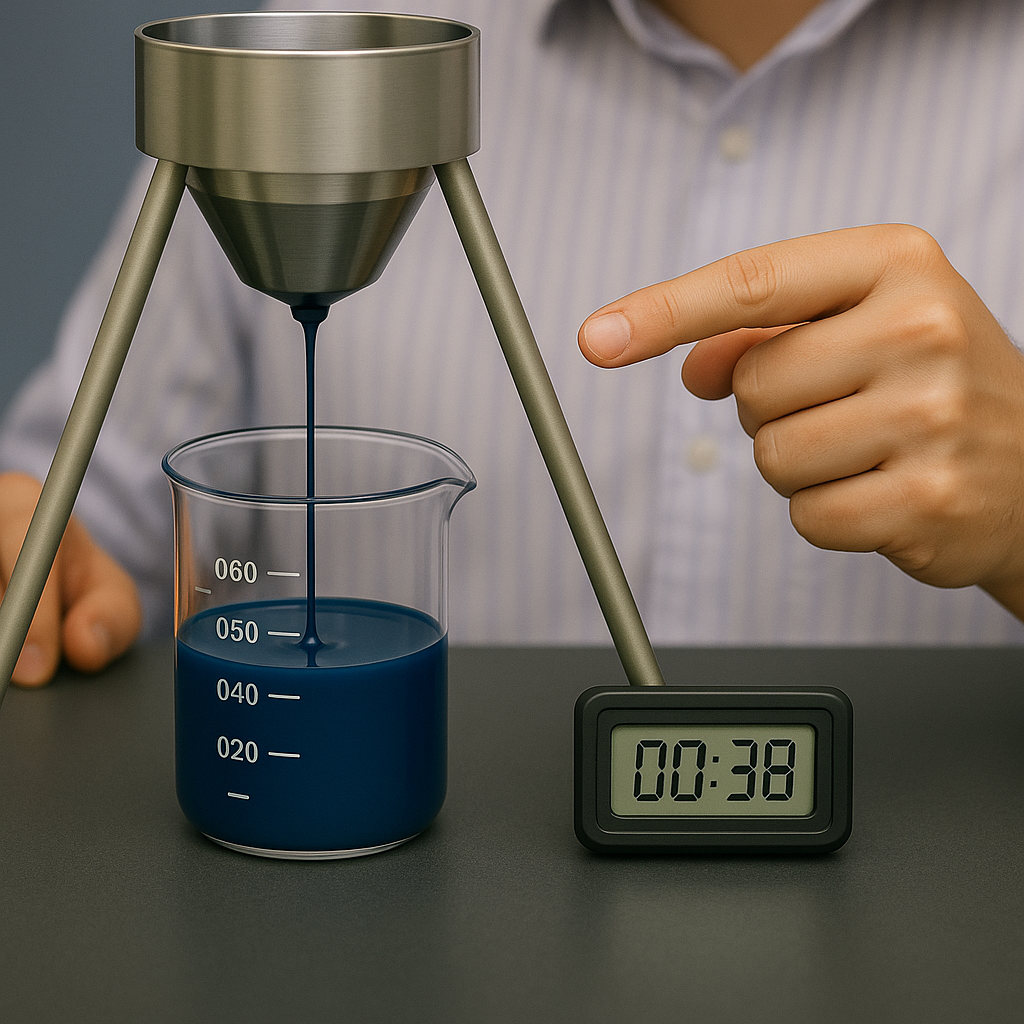
Why is Viscosity the Heart of Low-Thickness Anti-Corrosion Paints?
When we talk about low-thickness anti-corrosion paints, few factors are as decisive as viscosity. This parameter, which determines the fluidity of the paint, can be the difference between a perfect application and a failed coating, with serious consequences for the protection and durability of metallic structures. In this article, you will understand why controlling viscosity is essential in this type of application—and how to do it in a practical and effective way.
What is viscosity and why is it so important?
In simple terms, viscosity is the resistance a liquid offers to flow. In paints, it directly influences how the product spreads over the surface, adheres to the substrate, and forms the protective film after drying.
In the case of low-thickness anti-corrosion paints, this control is even more critical. Since the protective layer is thin, any application failure can compromise coverage, leaving the structure vulnerable to corrosion.
The dangers of incorrect viscosity
Let’s get to the point: what happens if the viscosity is not ideal?
- Paint that is too viscous (too thick):
- Difficulty of application
- Irregular film
- Coverage failures, bubbles, and pores
- Risk of excessive consumption and drying problems
- Paint that is too fluid (too thin):
- Running or sagging
- Film that is too thin, with insufficient protection
- Low resistance to abrasion and weathering
- Adhesion problems and stains
In addition, viscosity can vary with temperature—both the ambient temperature and the paint’s own temperature—which requires extra attention during application.
How to control viscosity in practice?
The good news is: with a simple and routine protocol, it is possible to ensure that viscosity is always under control. Here’s how:
- Check before applying: Before starting the job, measure the viscosity of each component (in two-component paints) and the final mixture. Compare it with the manufacturer’s specifications and check the paint’s temperature.
- Monitor during application: Over time, viscosity can change due to solvent evaporation or temperature changes. Therefore, take periodic measurements—every 15 to 30 minutes is a good interval, depending on the size of the project.
- Adjust with care: If adjustment is necessary, use only the thinner recommended by the manufacturer and add in small amounts. Mix well and measure again before continuing. Never dilute “by eye.”
- Document everything: Record each measurement: date, time, paint batch, temperature, viscosity, method used, and who performed the measurement. This history helps to understand performance and solve future problems.
- Take care of the equipment: Viscosity cups and viscometers need to be clean, properly stored, and calibrated. This ensures your measurements are reliable.
- Train your team: All this care only works if the team knows what they are doing. Invest in training so that everyone knows how to measure, adjust, and interpret results correctly.
Measurement methods: which one to use?
- Viscosity cups (Ford, Zahn, etc.): good for quick field measurements. They evaluate the time it takes for the paint to flow through a calibrated orifice.
- Rotational viscometers: ideal for the laboratory and more rigorous control. They evaluate the resistance to movement of a rotor inside the paint, providing more precise data.
Conclusion: good paint is paint with the right viscosity
Controlling viscosity is not a detail—it is an essential step to ensure that the paint fulfills its protective function. In low-thickness applications, this care makes all the difference in the durability, performance, and cost of the project. If your company works with anti-corrosion paints, incorporating a viscosity control protocol can be the missing step to elevate the quality of applications and reduce rework and failures.
Want more tips on applying coatings? Follow our next posts!